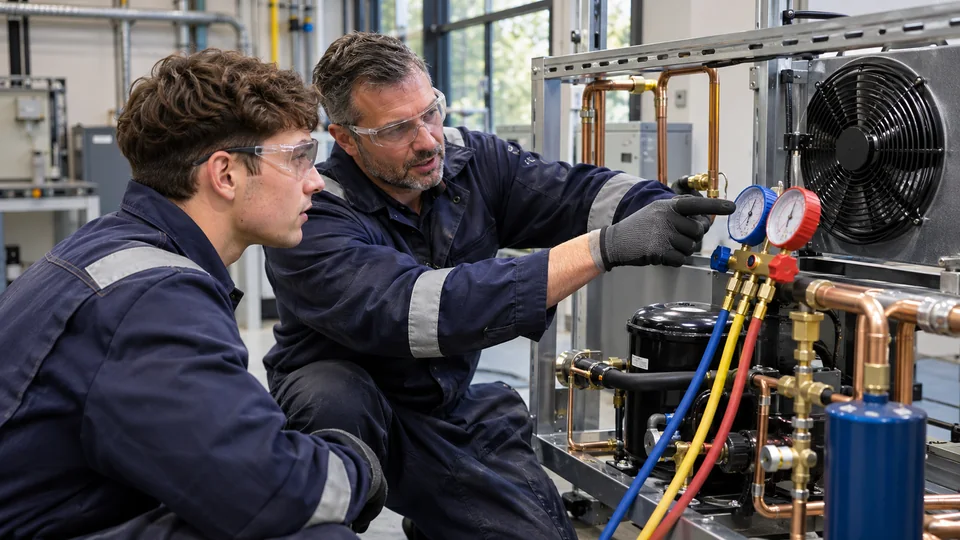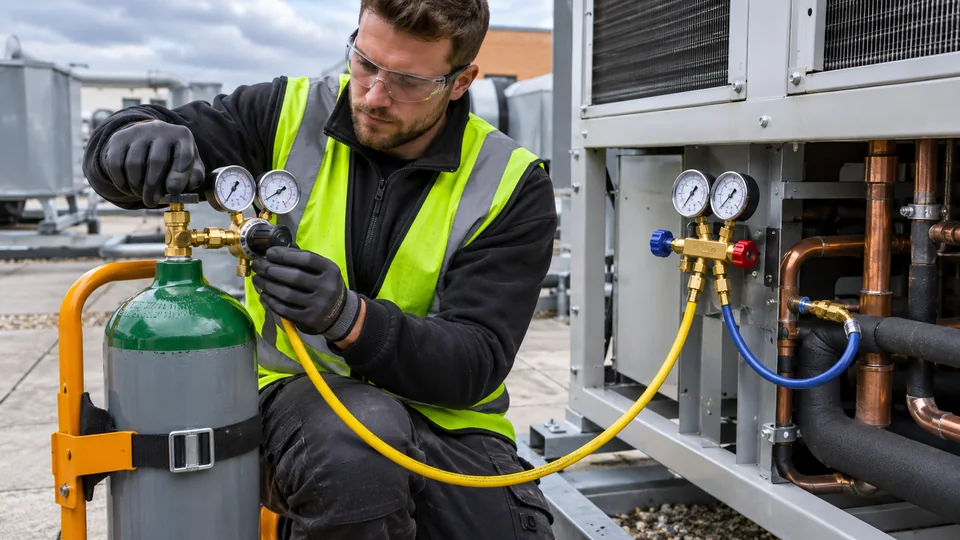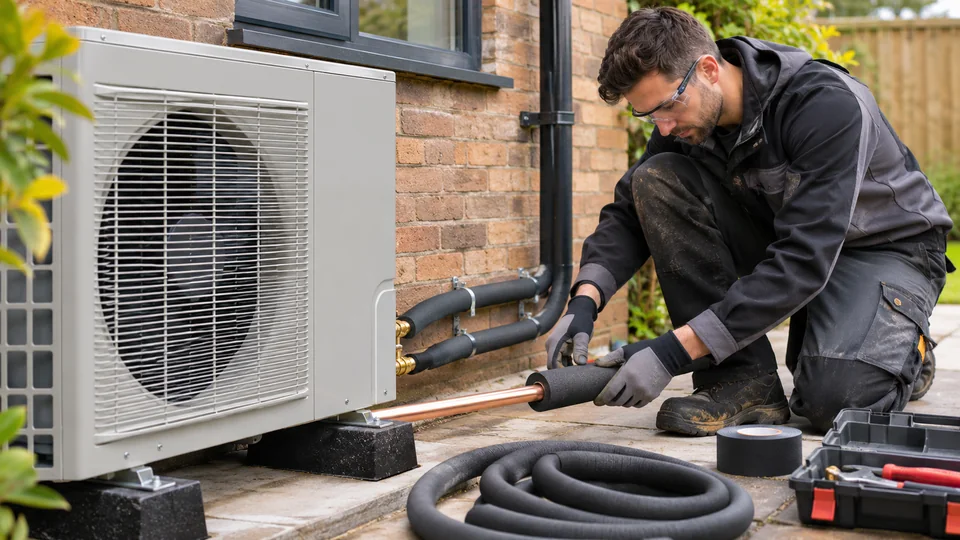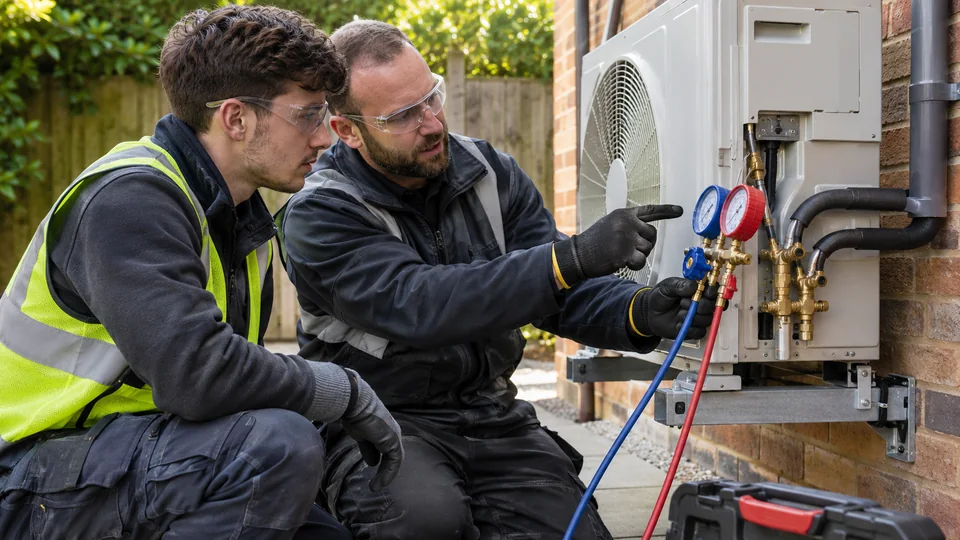
Passing your qualification is an important step. It does not give you the repeated exposure to different installations that makes decisions on site feel familiar. If you understand refrigeration theory but hesitate when organising a job, targeted F-Gas practical training can help you turn assessed skills into a reliable working routine.
The useful question is not simply whether you feel confident. It is which tasks you can complete safely, explain clearly and record accurately without someone prompting the next step. Confidence should grow from evidence of competence, rather than from taking on work beyond your present ability.
Assessment competence and field experience
An assessment samples defined knowledge and practical skills under specified conditions. Site work adds awkward access, unfamiliar equipment, incomplete records, changing weather and coordination with other trades. You may have successfully demonstrated a task once but not yet repeated it often enough to recognise when something is wrong.
That gap does not make the qualification meaningless. It identifies where further supervised experience is valuable. A sensible development plan separates tasks you can perform independently from those requiring supervision, further practice or specialist help. The scope of your certificate still matters; Category 1 and its limitations explains why a certificate is only part of readiness for a job.
Identify the points where you hesitate
Think about your last installation or service visit. Did you know which manual applied? Could you explain the intended test boundary? Did you trust your instruments? Were you clear about what to record before leaving? These questions are more useful than a general judgement that you need more experience.
Write down two or three specific learning objectives. For example, organise a pressure test from the equipment instructions, distinguish a system issue from a leaking service hose, or complete a commissioning record that another engineer could understand. Focused objectives make F-Gas refresher coaching easier to plan and evaluate.
Pressure testing: understanding the complete setup
Uncertainty often starts before any pressure is applied. The engineer must identify the relevant circuit, the manufacturer's procedure, suitable equipment and safe isolation. A gauge reading is meaningful only when you understand what is connected to it and which valves define the test volume.
Good practical instruction asks you to explain the setup before proceeding. It also covers the effect of temperature, the limits of a standing test and how to investigate a suspected leak. Our guide to pressure-testing mistakes examines these decisions without suggesting one test pressure suits every system.
Evacuation: measuring the system rather than guessing
Evacuation can appear straightforward until the vacuum stops improving or rises after isolation. The cause may be moisture, a system leak, a service connection, restricted hoses or pump condition. Repeating the same setup for longer does not necessarily resolve the underlying problem.
Practical coaching should include checking the evacuation equipment itself and positioning a suitable vacuum gauge so the reading represents the system. Discuss why an AC system may not hold a vacuum before treating every rising reading as proof of a pipework leak. Appropriate positive-pressure testing remains a separate requirement under the equipment procedure.
Recovery: build a deliberate working routine
Recovery requires more than knowing how to switch on a recovery unit. Identify the refrigerant, check equipment compatibility and cylinder suitability, establish available cylinder capacity and use suitable weighing arrangements. Refrigerant condition and cylinder contents matter; mixing unknown refrigerants creates further problems for safe handling and disposal.
A supervised session can examine preparation, connections, monitoring and the records needed for the work. It should also make clear when the engineer must stop. Never improvise around an unsuitable cylinder or machine, release refrigerant as a shortcut, or treat a training article as an equipment-specific recovery procedure.
Commissioning: connect the steps to the outcome
A system that starts is not automatically commissioned. The installation needs documented checks, appropriate test results, correct settings and functional evidence under recorded conditions. You should be able to explain both what was checked and what could not yet be verified.
On heat pumps, the refrigerant circuit interacts with controls and the heat-distribution system. Preparing for a first split heat pump installation helps identify the wider skills and coordination involved. Coaching can focus on refrigeration work without pretending that it replaces heating design or electrical competence.
Make supervised practice count
The most useful arrangement gives you time to prepare, carry out an agreed task within your competence and then review the result. Watching a demonstration helps, but it should be followed by an opportunity to explain and repeat the reasoning yourself. Any intervention needed for safety is part of the learning record, not something to hide.
At the end, record the tasks practised, the equipment used, points needing further work and a realistic next step. Several carefully chosen jobs can be more valuable than a day spent covering subjects you already understand. A good session should make your limits clearer as well as improve your technique.
Discuss the support you need
F-Gas 1 offers one-to-one on-site coaching. Describe your qualification, current work, equipment and the tasks you want to improve when enquiring. This helps establish whether the work and site conditions suit practical coaching.
Coaching supports development; it does not award a qualification or authorise work outside your certification and competence. Use it to build a repeatable method, recognise uncertainty early and know when to seek help. That is a stronger basis for confidence than expecting every unfamiliar job to feel easy.