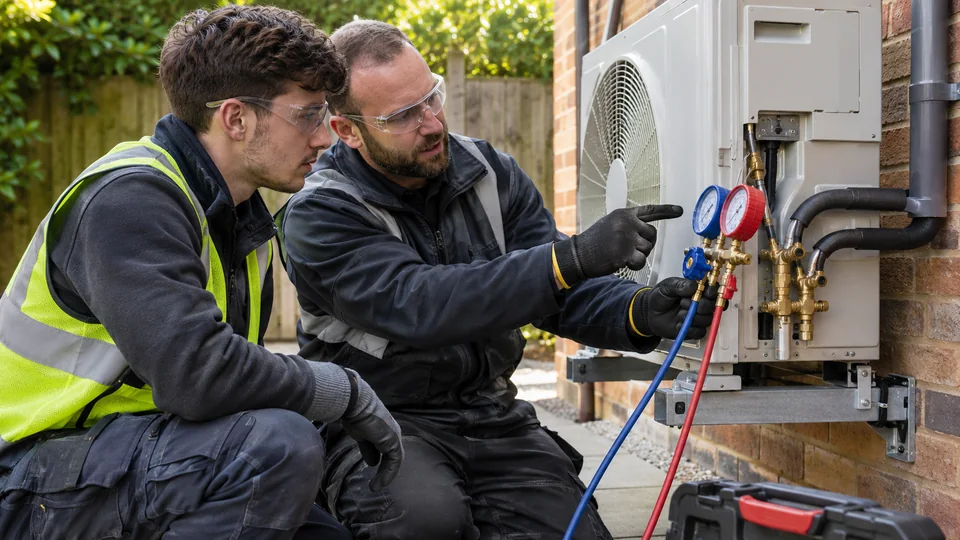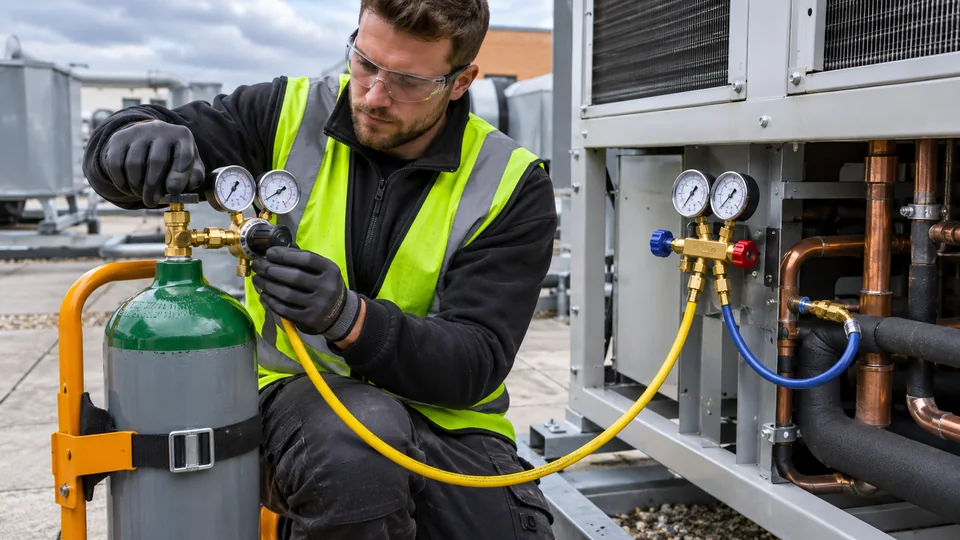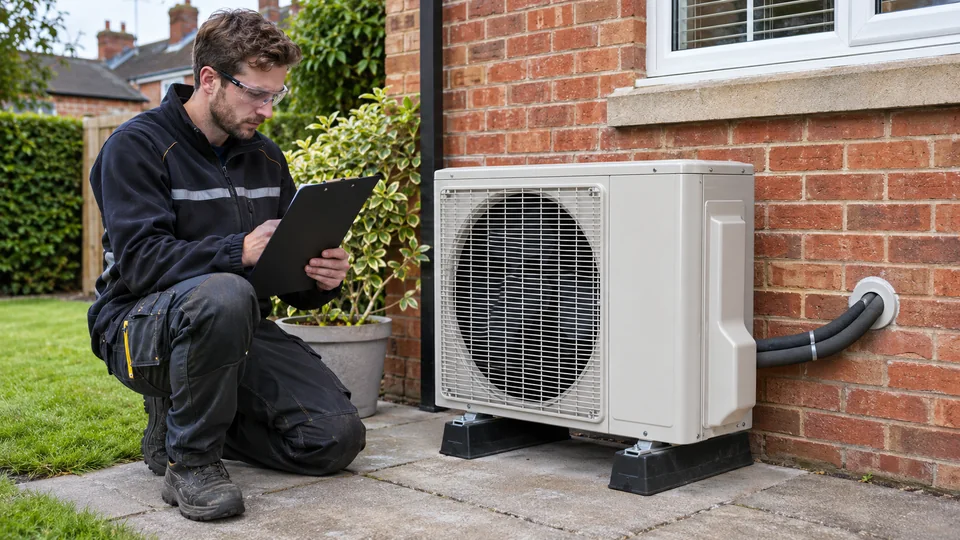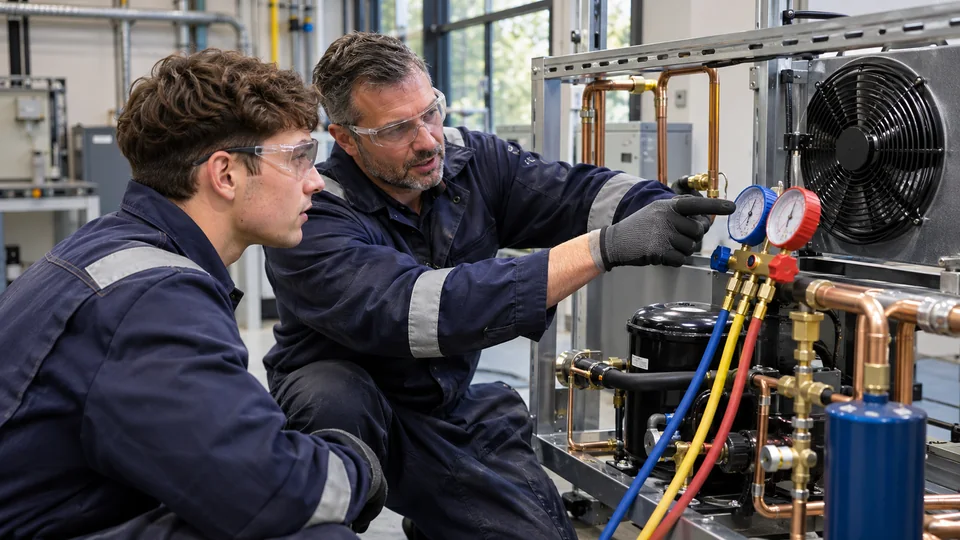
F-Gas refresher training is useful when your qualification is already in place but particular practical skills need attention. The aim is to identify what has become unfamiliar, practise it under appropriate supervision and leave with a clearer working method. It should be planned around actual gaps rather than repeating an entire qualification course by default.
F-Gas 1's practical coaching is development support. It does not award an F-Gas qualification or automatically renew certification. If you need a formal qualification, reassessment or confirmation of certificate validity, contact the relevant awarding or certification body.
When a refresher is worth considering
An engineer returning to refrigeration work may remember the principles but feel uncertain about equipment setup, records or the sequence of checks. Someone who normally undertakes maintenance might be less familiar with installing split AC. A heating engineer moving towards split heat pumps may need support with the refrigerant-side work within their qualifications and competence.
The trigger can also be a recurring problem: pressure tests that are difficult to interpret, slow evacuation or incomplete commissioning evidence. Those issues deserve investigation rather than a general instruction to work faster. Confidence after qualifying comes from understanding what the evidence is telling you.
Start with a skills review
List the tasks you perform regularly, those you have only practised during assessment and those you have never undertaken on the relevant equipment. Include preparation and documentation, not just tool use. Explain which tasks require prompting and where you are unsure about acceptance criteria.
Bring a realistic example with identifying customer details removed: an equipment model, an anonymised commissioning sheet or a description of a difficult result. This makes the discussion specific. A coach can then help distinguish a missing skill from unsuitable tools, incomplete instructions or a wider design issue.
Pressure testing skills that become rusty
Pressure testing involves interpreting a manufacturer procedure, selecting rated equipment and defining the test boundary. Engineers who have not done it recently may struggle with regulator selection, connection checks or allowing for changing temperature. The setup itself can introduce leaks that confuse the result.
A useful session includes planning and explaining the test, checking the apparatus and recording observations. Our pressure-testing guide sets out common errors. It deliberately avoids a universal pressure or hold period because those must come from the applicable equipment procedure and standards.
Evacuation and vacuum measurement
Evacuation performance depends on the complete arrangement: pump condition, hose conductance, connections, isolation and gauge position. A vacuum pump running for a long time does not prove that the system has reached the required condition. Nor does a reading at the pump necessarily describe the furthest part of the circuit.
Practical work can compare the behaviour of checked equipment with the connected system. It can also develop a more systematic response to a rising vacuum. Read why a system may not hold vacuum to separate possible leaks, moisture and measurement problems before deciding what to practise.
Recovery, handling and preparation
Refrigerant recovery deserves a review when the process is unfamiliar or equipment has changed. Suitable machines, hoses and cylinders must match the refrigerant and task. Cylinder identification, weighing, condition and available capacity need attention before starting, rather than when the job is already under way.
Discuss what would make the engineer stop and seek assistance: uncertain refrigerant identity, damaged equipment, inadequate ventilation or unclear cylinder contents. A refresher should reinforce those decisions. It should never encourage shortcuts such as venting or using a cylinder outside its permitted conditions.
Moving into split AC or heat pumps
Experience with one type of equipment does not transfer automatically to another. Check the refrigerant, jointing method, pipework limits, safety provisions and commissioning procedure for the model. Heating-water arrangements and controls add further interfaces on an air-to-water split heat pump.
Use the commissioning checklist as a discussion framework. The purpose is to identify which checks belong to the refrigeration engineer and which require coordination with electrical or heating specialists. Coaching should help you recognise the complete job while staying within the agreed scope of support.
What a one-to-one session can achieve
Agree a small number of outcomes: explain a setup without prompting, take meaningful measurements, identify a misleading result or complete a clear test record. Demonstration should lead to supervised practice and a review of the reasoning behind each step.
The session also needs a suitable location and equipment, safe access, agreed responsibilities and time for questions. A live customer job may impose constraints that a dedicated rig does not. Clarify those conditions in advance rather than expecting useful coaching to happen around an already rushed installation.
Leave with a development record
Record what you practised, which instructions you used and what still needs attention. Decide how you will maintain the skill through further supervised work. Avoid treating attendance as a blanket statement that you can now handle any installation independently.
Describe your background and objectives when you discuss practical coaching with F-Gas 1. The best refresher is one that addresses a recognisable problem, strengthens safe decisions and gives you a method you can apply again on suitable equipment.