Air conditioning commissioning checks that an installed system is safe, correctly prepared and functioning as intended, with evidence to support handover. It is more than switching on the unit and confirming cool air. A useful checklist links physical inspections, test results, settings and operating conditions to a clear record.
The checklist below is general. Manufacturer procedures and applicable regulations and standards take precedence. It is not an authorisation to undertake electrical or refrigerant work outside your qualifications and competence, and it does not replace a model-specific commissioning sheet.
Prepare before the commissioning visit
Obtain the correct installation and service documents, identify indoor and outdoor model combinations and establish the intended design conditions. Confirm who is responsible for electrical checks, access, controls and any building-system interfaces. Missing information can prevent completion even when the equipment itself appears ready.
Review the installation history. Which checks have already been performed, by whom and with what records? If someone else installed the pipework, do not assume that a verbal assurance replaces the required evidence. Agree how incomplete or unacceptable work will be resolved before charging or starting the system.
General commissioning checklist
Use these prompts to build a job-specific record. Mark genuinely inapplicable items as such, and explain incomplete checks rather than treating an empty box as a pass.
- Confirm equipment identity, compatible unit combination and the correct documentation revision.
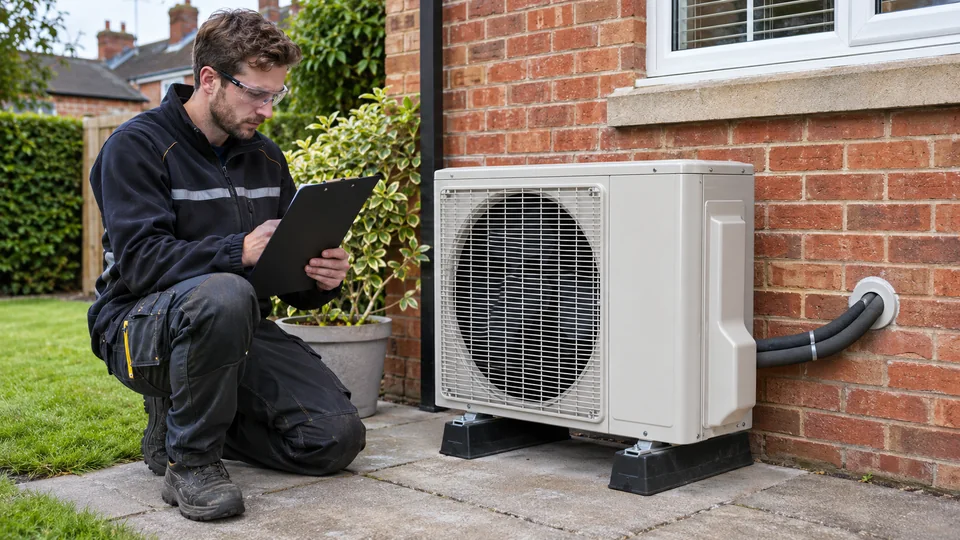
- Check mounting, clearances, access, supports and the condition of the installation.
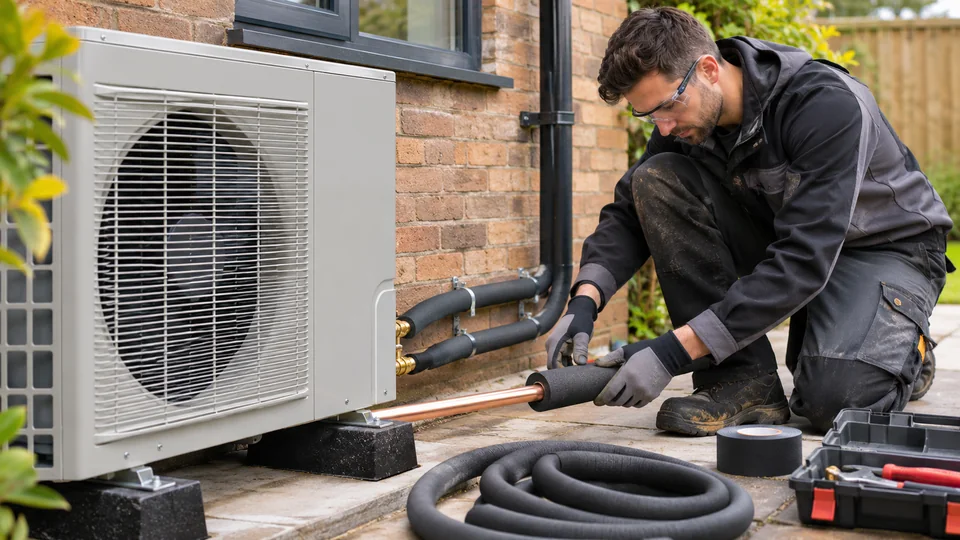
- Inspect refrigerant pipework sizes, lengths, insulation, supports and joints against the instructions.
- Check condensate arrangements and demonstrate satisfactory drainage where applicable.
- Confirm electrical inspection and testing by a competent person, including supply, protection, earthing and safe isolation arrangements.
- Complete and record the specified pressure and leak checks for the relevant circuit.
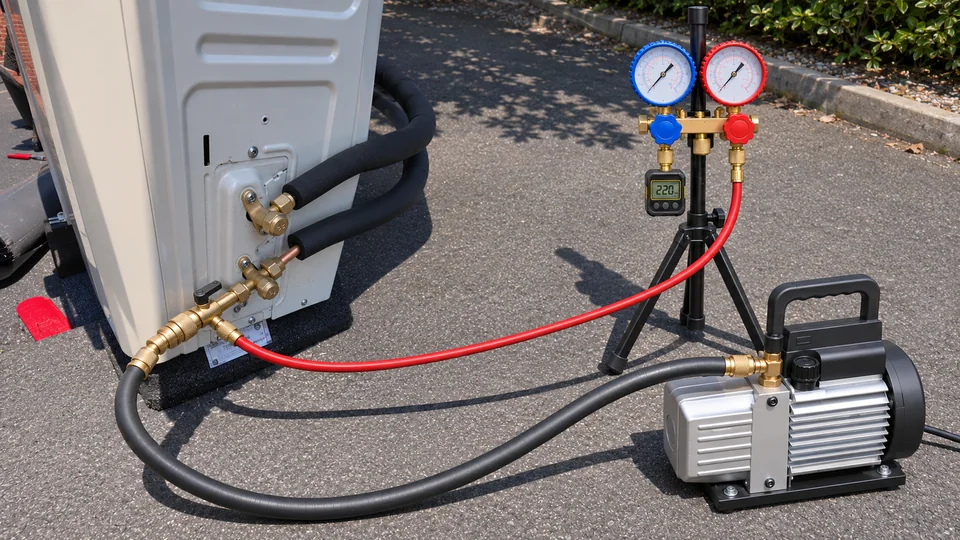
- Complete and record the manufacturer's evacuation and standing checks with suitable instruments.
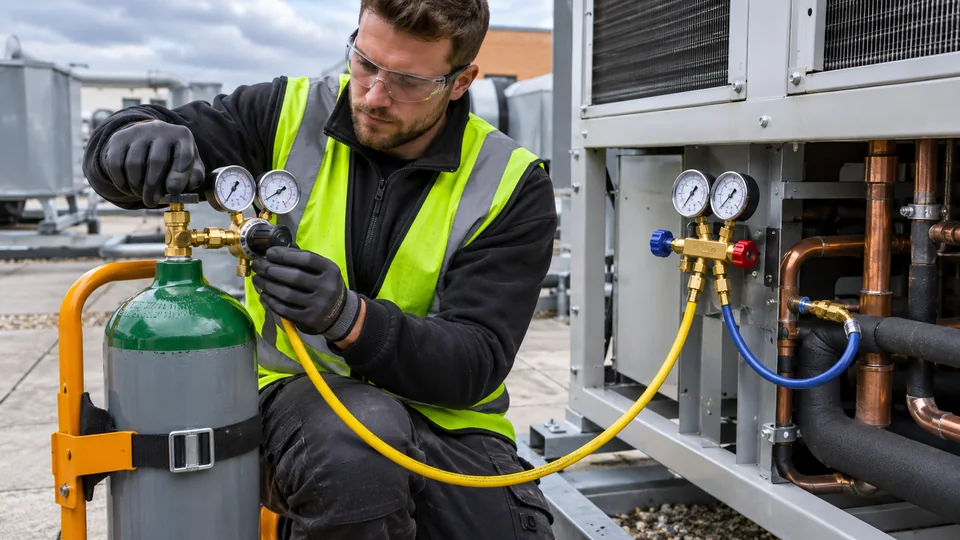
- Establish the required refrigerant charge and document any addition by the specified method.
- Verify valve positions, caps, covers and required labels before operation.
- Confirm controls, addressing, settings and any interlocks or external interfaces.
- Perform the prescribed functional tests and record operating conditions and observations.
- Resolve defects, retain the commissioning evidence and complete customer handover.
Pipework and physical inspection
Look for avoidable strain, unsupported runs, damaged insulation and fittings that cannot be accessed for inspection. Confirm that the installed route complies with length and height limits. Check that pipe penetrations and drainage arrangements suit the building and installation requirements.
Do not let a tidy external finish distract from missing evidence. Concealed joints, incorrect pipe sizes or a mismatched unit combination can undermine performance even where the installation looks professional. Record defects and address them before progressing to steps that would make correction more difficult.
Electrical and safety checks
Refrigeration competence does not replace electrical competence. The responsible person must establish that supply and protection are suitable and complete the relevant inspection and tests. Safe isolation must be understood before accessing equipment, and covers and protective provisions must be restored before operation.
Consider the refrigerant's safety characteristics and the manufacturer's location and ventilation provisions. Do not assume that the same installation conditions suit every refrigerant or charge. Where an issue crosses into another discipline, pause and obtain the appropriate support.
Pressure testing and evacuation
These are distinct stages with different purposes and acceptance criteria. Plan pressure testing around the exact equipment and test boundary. Record the required pressure, timing, temperature observations and leak-check findings using the applicable procedure.
Evacuation then addresses air and moisture in the prepared circuit. A suitable vacuum instrument and connection arrangement are essential. If the result is unsatisfactory, investigate vacuum-holding problems rather than proceeding because the pump has run for a familiar amount of time.
Refrigerant charge and valve arrangements
Establish whether the factory charge covers the installed arrangement and whether a calculated addition is required. Use the actual model instructions, installed pipe lengths and relevant accessories. Record the basis of any calculation and the measured amount added using suitable weighing equipment.
Do not add refrigerant simply to achieve a remembered suction pressure. Operating pressures depend on load, mode, ambient conditions and controls. Follow the specified charging method and sequence, and verify valve positions and closure details under the manufacturer's instructions.
Functional testing needs context
Record the operating mode, conditions and relevant settings alongside observations. Check unit response, controls, drainage, unusual noise and any required interlocks. Allow the operating conditions and prescribed test mode to guide interpretation rather than expecting every system to show identical temperatures or pressures.
If something is wrong, stop guessing and gather evidence. Heat pump fault-finding principles explain why airflow, controls and heat transfer should be considered before assuming a refrigerant problem. On a first split heat pump job, heating-water and control interfaces require particular coordination.
Handover and records
Explain normal operation, controls, maintenance needs and the action to take if a fault occurs. Provide the agreed manuals and commissioning evidence, including any outstanding limitations. A short demonstration is often more useful than leaving a customer with unexplained settings.
Keep traceable records of the equipment, tests, charge work, findings and corrective actions. The Daikin installer reference guide illustrates why commissioning instructions are model-specific. For help applying a disciplined method, discuss practical commissioning coaching with F-Gas 1.