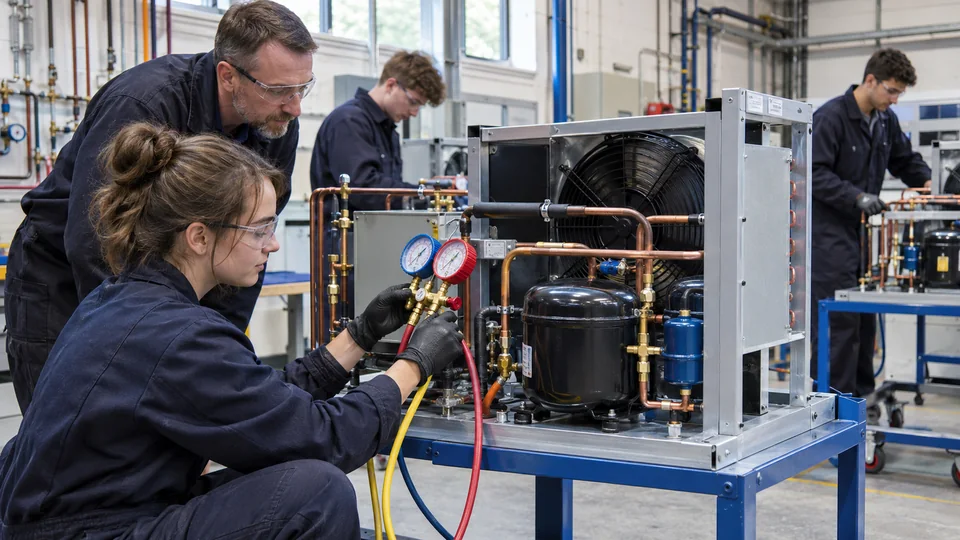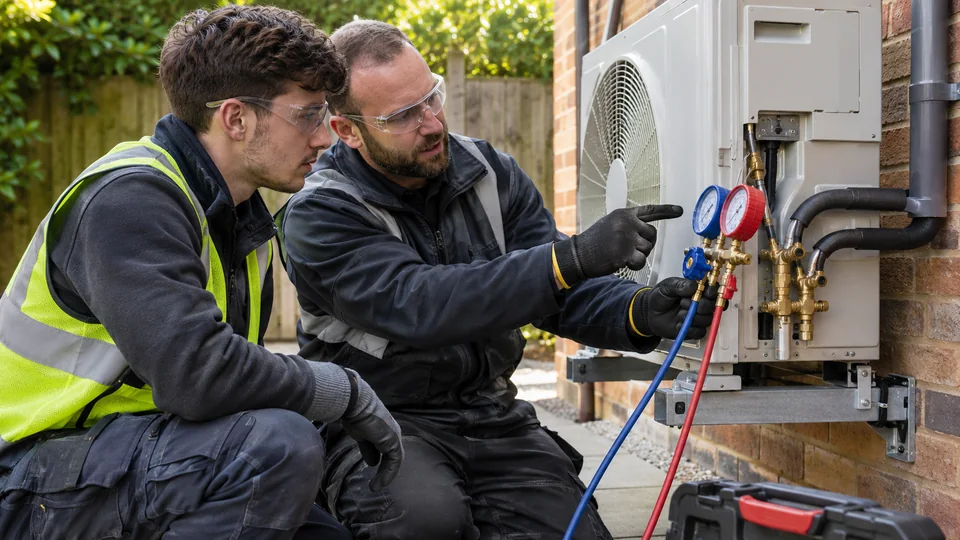
A freelance F-Gas trainer or assessor needs relevant technical competence, the ability to work with learners and a clear fit with the centre's quality procedures. Availability alone is not enough. Before booking support, verify the person's evidence against the actual role and the current requirements of your awarding organisation.
Teaching and assessment are connected but distinct responsibilities. Someone who explains a task well is not automatically approved to assess your qualification, and an assessment credential alone does not demonstrate effective practical teaching. Define which role you need before comparing candidates.
Begin with the qualification and delivery plan
Identify the exact qualification, units, learner profile and equipment. Confirm whether the work involves theory teaching, practical demonstration, supervised practice, assessment or a combination. The centre should know the required staffing arrangements and evidence before requesting cover.
Clarify the timetable and scope of responsibility. A visiting tutor needs enough information to prepare, while an assessor needs access to the correct current assessment documents through the centre's authorised arrangements. Avoid sharing controlled assessment material through informal channels.
Verify relevant technical experience
Ask about recent work relevant to the systems and processes being taught. Seek evidence that the person can explain pressure testing, evacuation, recovery and commissioning decisions, including what makes a result unreliable. Broad industry experience is useful when it connects clearly to the planned training.
Do not infer competence solely from years served or a confident presentation. Ask how the tutor handles unfamiliar equipment, conflicting information or an unsafe learner action. An experienced professional should be able to describe when they would stop and seek clarification rather than improvise.
Check teaching and assessment evidence separately
Your awarding organisation and centre approval conditions determine the qualifications, experience and role arrangements required. Obtain the relevant evidence and confirm that any approval or registration is applicable to your centre and qualification. Do not assume an assessor can work under another centre's arrangements without checks.
For teaching, discuss how the person plans a practical session and checks understanding. For assessment, discuss consistency, evidence quality, impartiality and adherence to the authorised process. These conversations should support documented checks rather than replace them.
Look for clear practical demonstrations
A useful demonstration makes the reasoning visible. Learners should understand the intended result, the checks before starting and the conditions that require work to stop. A demonstration that focuses only on speed can hide the very decisions learners need to practise.
Our article on practical training in centres explores this further. Ask a potential tutor how they would move from explanation to supervised practice without allowing learners to copy a sequence mechanically. The answer should reflect the centre's equipment and learner experience.
Support different starting points
A group may include experienced engineers, career changers and learners with sound theory but little tool familiarity. Ask how the tutor identifies these differences and adjusts explanations while maintaining the same required standards. Extra explanation is not the same as lowering an assessment criterion.
Language, literacy and other learning needs should be handled through the centre's support and reasonable-adjustment procedures. A freelancer should know how to raise concerns and record support without making unauthorised changes to an assessment. Agree how learner information will be shared appropriately.
Understand the centre's working procedures
Induction should cover workshop rules, emergency arrangements, equipment faults, refrigerant and cylinder management, record keeping and escalation. Confirm who is responsible for preparing rigs and checking that tools are ready. A technically capable visitor still needs local information.
Explain quality-assurance expectations and access to internal verification or other relevant support. Assessment decisions and records must follow the approved process. Freelance cover should fit that system rather than introduce a separate method that becomes difficult to audit after the visit.
Ask useful questions before booking
Questions should reveal how the person works, not simply invite a list of titles. Ask for relevant evidence and discuss the practical arrangements needed for a successful day.
- Which technical and teaching experience matches this qualification and equipment?
- What evidence does the centre need to verify before delivery or assessment?
- How do you check learners understand a demonstration before independent practice?
- What preparation, induction and equipment information do you require?
- How are concerns, incidents, incomplete work and assessment records handed over?
- How will availability, scope, cancellation and follow-up be agreed?
Be realistic about the outcome of a course
Completing an assessment does not give learners extensive site experience. A good tutor can help them understand that distinction and recognise the limits of their current competence. Confidence after qualification is a separate development topic, and refresher coaching may be useful later for qualified engineers.
Centres should not promise that a short course removes every practical gap. Clear demonstrations, sufficient practice and honest feedback make a stronger offer. Explain what the qualification assesses and what further supervised workplace experience may be needed.
Discuss support with F-Gas 1
The existing service pages describe assessor support and F-Gas training delivery. Share the qualification, dates, location, learner numbers and role required when enquiring about John's availability. Verify credentials and centre-specific approval through your normal process before confirming an assessment role.
You can read the existing About John page for background. This article does not claim any additional awarding-body approval, qualification or membership; the evidence for a particular engagement should be confirmed directly.